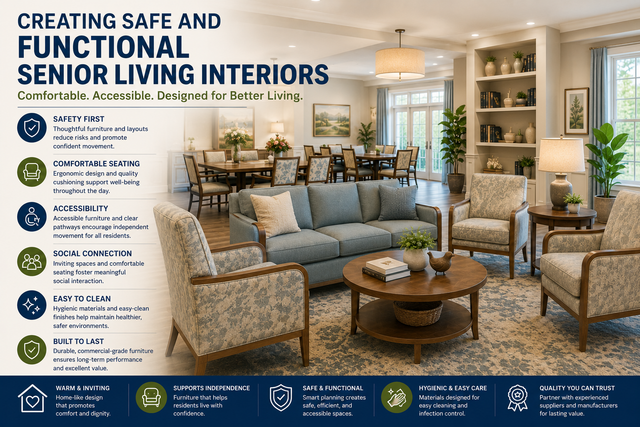
A well-designed senior living interior is more than an attractive space. It directly affects residents' comfort, mobility, safety, and emotional well-being. As retirement communities, assisted living centers, and healthcare facilities continue to evolve, interior design has shifted from purely functional layouts to resident-focused environments that promote independence and a better quality of life.
One of the most important elements in this transformation is choosing high-quality senior living furniture. The right furniture helps create interiors that are safe, practical, welcoming, and capable of meeting the daily needs of older adults while supporting caregivers and visitors.
Why Interior Design Matters in Senior Living
Residents spend most of their day interacting with their surroundings. Whether they are dining, reading, relaxing, participating in activities, or meeting family members, the design of each space influences how comfortable and confident they feel.
A carefully planned interior improves accessibility, encourages movement, reduces stress, and creates an environment where residents feel respected and valued.
Furniture is one of the most influential components of this design because it is used continuously throughout the day.
Prioritizing Resident Safety
Safety should always be the first consideration when designing senior living interiors.
Older adults may experience reduced balance, slower movement, or limited mobility, making furniture selection extremely important.
Safe furniture typically includes:
- Reinforced commercial frames
- Stable construction
- Rounded corners
- Slip-resistant feet
- Strong armrests
These features help residents move more confidently while reducing the risk of accidents.
Well-positioned furniture also creates clear walking paths throughout the facility.
Comfortable Seating Improves Daily Life
Comfort directly affects how residents experience their surroundings.
Whether sitting during meals, enjoying recreational activities, or relaxing with visitors, supportive seating makes everyday life more enjoyable.
Quality furniture generally provides:
- Ergonomic lumbar support
- Comfortable cushioning
- Proper seat height
- Balanced seat depth
- Supportive armrests
These features reduce physical strain while encouraging healthy posture and greater participation in community activities.
Comfortable residents are often more socially active and emotionally engaged.
Accessibility Encourages Independence
Maintaining independence is one of the primary goals of modern senior living communities.
Furniture should allow residents to perform daily activities with minimal assistance.
Important accessibility considerations include:
- Wide walking areas
- Proper furniture spacing
- Chairs that are easy to enter and exit
- Accessible dining arrangements
- Clear circulation paths
These design choices make it easier for residents using walkers or wheelchairs to move safely throughout the building.
Accessible interiors support confidence and self-reliance.
Creating Warm and Inviting Spaces
Today's senior living communities are designed to feel welcoming rather than clinical.
Furniture with natural finishes, soft upholstery, and modern residential styling creates spaces where residents feel comfortable from the moment they arrive.
Warm interior design also benefits visiting family members by creating pleasant environments where meaningful time can be spent together.
A home-like atmosphere contributes to greater emotional comfort and overall satisfaction.
Furniture That Supports Social Interaction
Community living thrives when residents have opportunities to connect with others.
Comfortable seating arrangements encourage conversation in:
- Lounges
- Dining rooms
- Libraries
- Activity centers
- Outdoor gathering areas
These shared spaces help residents build friendships while reducing feelings of isolation.
Well-designed communal areas strengthen the overall sense of community.
Choosing Durable Commercial Furniture
Furniture in senior living facilities is used every day by residents, visitors, and staff.
Commercial-grade furniture is designed to withstand:
- Continuous daily use
- Frequent movement
- Regular cleaning
- Moisture exposure
- General wear and tear
Durable products maintain their appearance while reducing repair and replacement expenses.
Long-lasting furniture represents a wise investment for every facility.
Supporting Hygiene Through Smart Material Selection
Healthcare environments require furniture that is easy to clean and sanitize.
Modern senior living furniture often incorporates:
- Moisture-resistant finishes
- Antimicrobial upholstery
- Scratch-resistant surfaces
- Stain-resistant fabrics
- Easy-clean protective coatings
These materials help facilities maintain excellent hygiene standards while simplifying routine maintenance.
Clean environments contribute to healthier living conditions for residents.
Flexible Furniture for Multi-Purpose Areas
Senior living communities often host a variety of daily activities, requiring furniture that adapts to changing needs.
Flexible furniture solutions allow spaces to be used for:
- Exercise classes
- Community meetings
- Educational workshops
- Entertainment events
- Family celebrations
Furniture that is easy to rearrange while remaining stable improves operational efficiency and enhances resident experiences.
Versatile interiors support a wider range of community programs.
Working with Experienced Aged Care Furniture Suppliers
Reliable aged care furniture suppliers understand the specialized requirements of healthcare and senior living environments.
Experienced suppliers provide assistance with:
- Furniture selection
- Interior planning
- Material recommendations
- Product customization
- Long-term customer support
Their expertise helps facilities create interiors that balance safety, comfort, durability, and visual appeal.
Professional guidance also reduces the risk of costly purchasing decisions.
Choosing Trusted Manufacturers
Established senior living furniture manufacturers combine ergonomic research, advanced engineering, and commercial-quality production to develop furniture specifically for elderly care.
Their products are designed to provide:
- Exceptional comfort
- Reliable durability
- Enhanced resident safety
- Attractive residential aesthetics
- Consistent long-term performance
Partnering with experienced manufacturers ensures furniture continues delivering value throughout years of daily use.
Building Interiors That Improve Quality of Life
Creating safe and functional senior living interiors requires careful planning, quality furniture, and a deep understanding of residents' needs. Every furniture decision influences comfort, mobility, safety, and emotional well-being.
By investing in durable, ergonomic, and thoughtfully designed furniture, senior living communities create environments where older adults can maintain their independence while enjoying comfortable and meaningful lives. Working with experienced suppliers and trusted manufacturers further strengthens these investments, ensuring every interior supports exceptional care, efficient operations, and lasting resident satisfaction.
Comments